From the stages of Edinburgh and Glasgow to the V&A Dundee
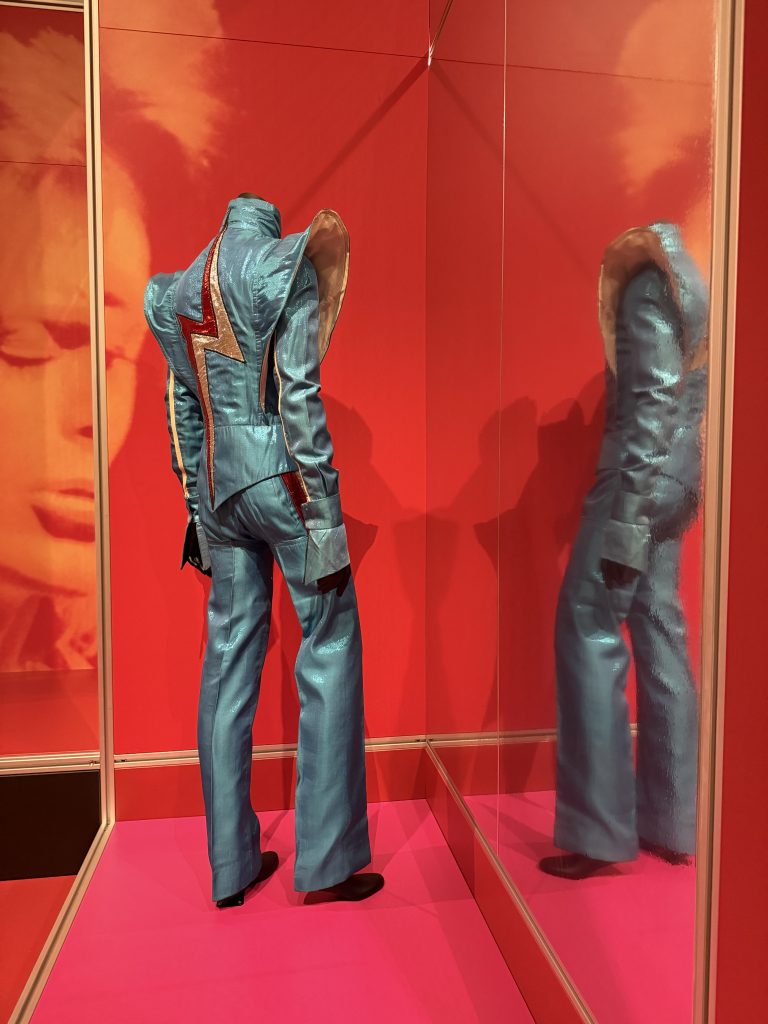
I have just returned from a visit to the wonderful V&A Dundee, where the new exhibition David Bowie: On Tourcelebrates one of the most extraordinary and creative musicians of the 20th century.
It is a fascinating exhibition, not simply about his music, but about the man behind the many faces, costumes and characters. And what makes it particularly interesting here in Scotland is that Bowie had quite a history with our country.
From David Jones to David Bowie
Born David Robert Jones in Brixton, London, on 8 January 1947, Bowie grew up with a fascination for music, particularly American jazz. His father encouraged his musical interests, and the saxophone became one of his first instruments.
He eventually changed his name to David Bowie to avoid confusion with Davy Jones of The Monkees.
His early career was far from an overnight success. He experimented with different bands, musical styles, theatre, mime and performance before finding wider recognition with Space Oddity in 1969.
But it was his creation of Ziggy Stardust in the early 1970s that transformed him into an international star.
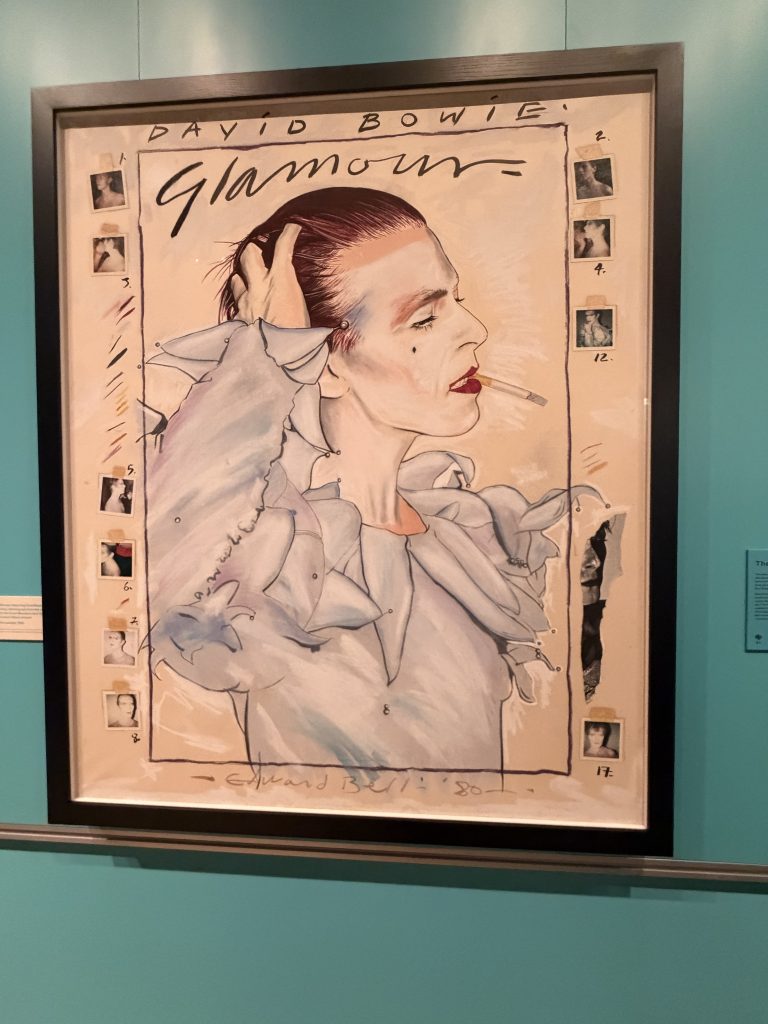
Bowie was never content to remain the same artist for long. From Ziggy Stardust to the Thin White Duke, from his experimental Berlin years to the enormous commercial success of Let’s Dance, he continually reinvented himself.
Behind the flamboyant public image was also a private man. He had two children, Duncan Jones from his first marriage to Angie Bowie, and Alexandria, known as Lexi, with his second wife, the model Iman, whom he married in 1992.
His later years were spent largely away from the public eye in New York. He died on 10 January 2016, just two days after his 69th birthday and the release of his final album, Blackstar.
Scotland and the making of Ziggy Stardust
Perhaps one of the most fascinating Scottish connections is Bowie’s relationship with the dancer, mime artist and choreographer Lindsay Kemp.
During the late 1960s, Bowie worked with Kemp in Edinburgh, exploring mime, movement, theatre and the possibilities of creating characters through performance.
These experiences would become enormously influential in the development of his stage persona.
Long before Ziggy Stardust became a household name, Bowie was experimenting with the theatrical ideas that would eventually make him famous.
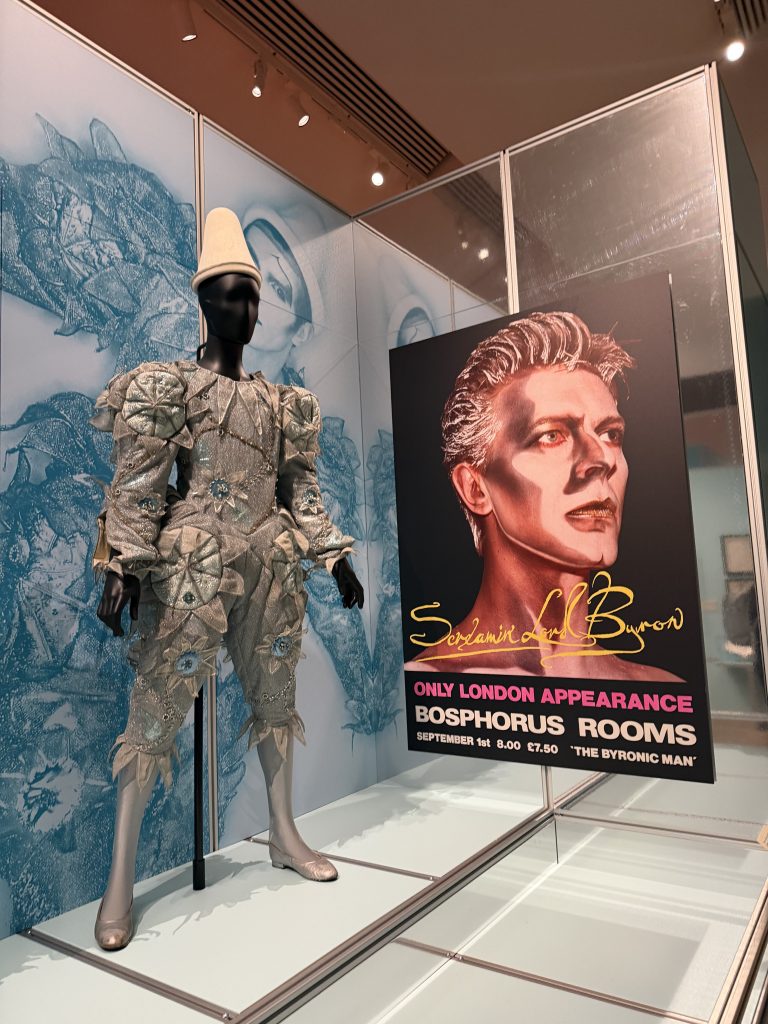
In 1968, he appeared in Kemp’s production Pierrot in Turquoise, combining music, mime and dance. The production was later filmed in Edinburgh for Scottish television as The Looking Glass Murders.
It is rather wonderful to think that some of the ideas behind one of rock music’s most famous characters were developed here in Scotland.
Dundee – from small audiences to Ziggy Stardust
Bowie first performed in Dundee in 1966, long before he became a superstar.
His early Scottish appearances were not always successful. In 1969, despite the growing popularity of Space Oddity, several concerts attracted disappointing audiences, and a planned Dundee performance was cancelled.
How things had changed by 17 May 1973!
That evening, Bowie arrived at Dundee’s Caird Hall as Ziggy Stardust, performing to an enthusiastic, sold-out audience of around 2,500 people.
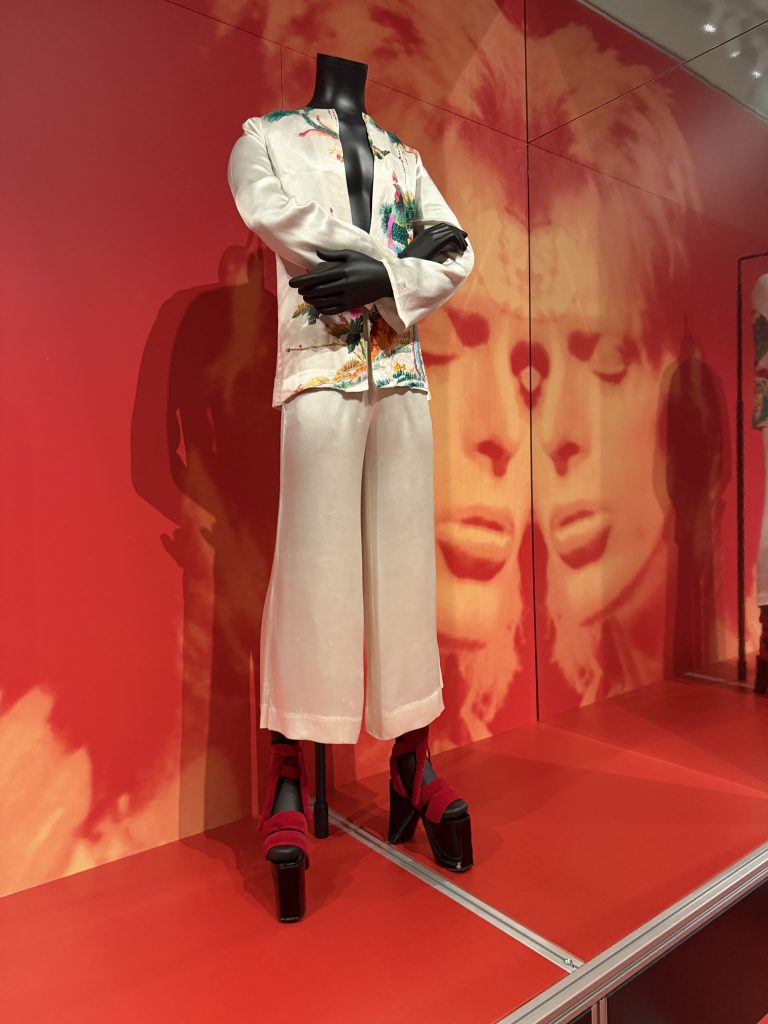
Dressed in a striking red Kansai Yamamoto jumpsuit, he performed songs including Changes, The Jean Genie and Life on Mars?
More than fifty years later, this memorable evening forms an important part of the V&A Dundee exhibition.
Glasgow, Edinburgh and the Scottish audiences
Bowie returned to Scotland throughout his career, and Scottish audiences clearly made an impression on him.
His performances at Glasgow’s legendary Apollo in June 1978 became particularly memorable. He admired the excitement and enthusiasm of the Glasgow crowds.
In 1983, during his hugely successful Serious Moonlight Tour, he performed at Murrayfield Stadium in Edinburgh in front of tens of thousands of fans.
His musical connections extended beyond the stage. Glasgow-born guitarist Ricky Gardiner contributed to Bowie’s groundbreaking 1977 album Low, recorded during his experimental European period.
His final Scottish concert took place at Glasgow’s SECC in November 2003.
David Bowie at the V&A Dundee
The exhibition, David Bowie: On Tour, brings together around 100 objects from his remarkable archive.
There are costumes, photographs, musical instruments, handwritten lyrics and personal objects, offering a glimpse into the imagination of a man who was so much more than a singer.
For me, the exhibition is another reminder of how much cultural history Scotland has to offer, sometimes in the most unexpected places.
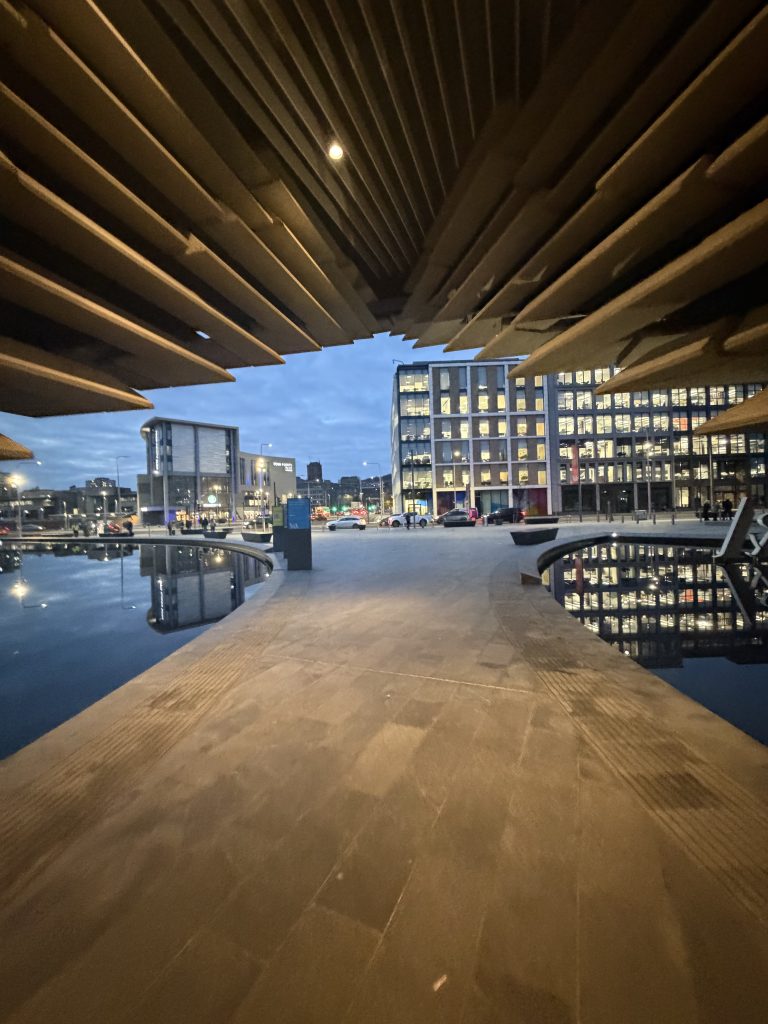
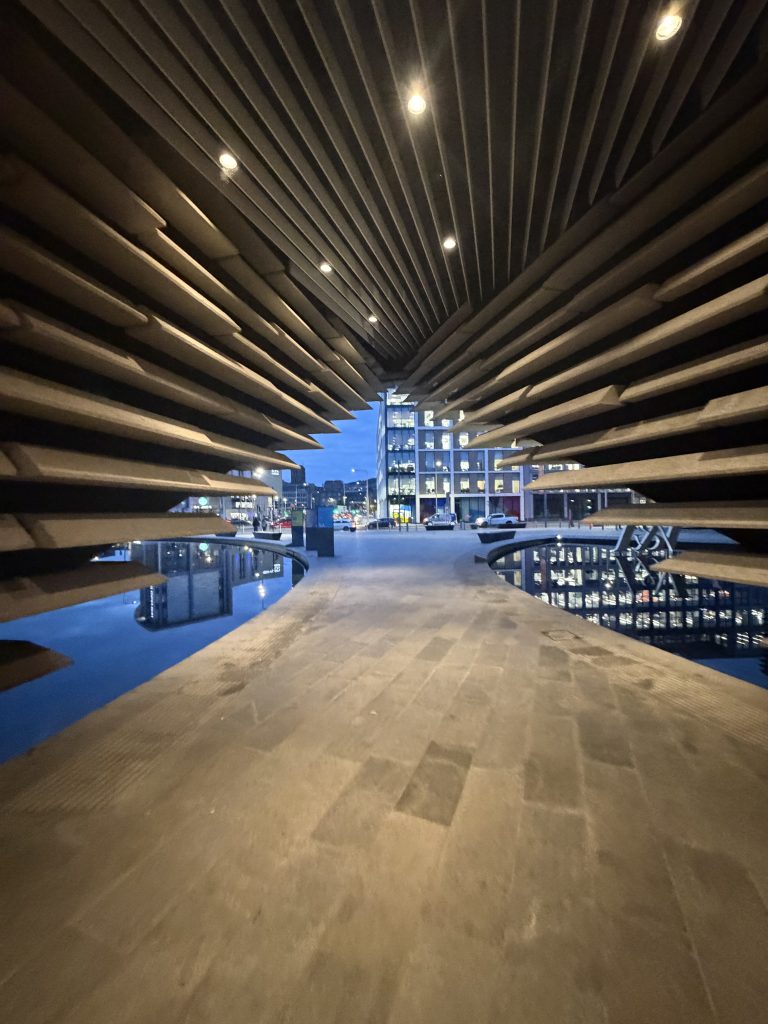
The V&A Dundee itself is a remarkable building, standing on the banks of the River Tay and designed by the Japanese architect Kengo Kuma. It is well worth a visit, whether you are interested in music, architecture, design or simply discovering something different.
The exhibition runs from 4 November 2026 until 15 February 2027.
Explore David Bowie: On Tour at V&A Dundee
Discover a different side of Scotland with Starfish Travel
Scotland is famous for its castles, whisky distilleries, golf courses and breathtaking landscapes. But our music, art, architecture and cultural history are every bit as fascinating.
At Starfish Travel, we love incorporating these less obvious experiences into our bespoke private tours.
A visit to the V&A Dundee can be combined with time exploring the historic city, the beautiful coast of Fife, St Andrews or other places that tell the many stories of Scotland.
After all, travelling should be about discovering something unexpected along the way.
Starfish Travel – Bespoke Private Tours of Scotland
David Bowie’s films
Bowie was a remarkably versatile actor, appearing in everything from science fiction and fantasy to historical dramas and comedies.
| Year | Film | His role |
|---|---|---|
| 1967 | The Image | The Boy (short film) |
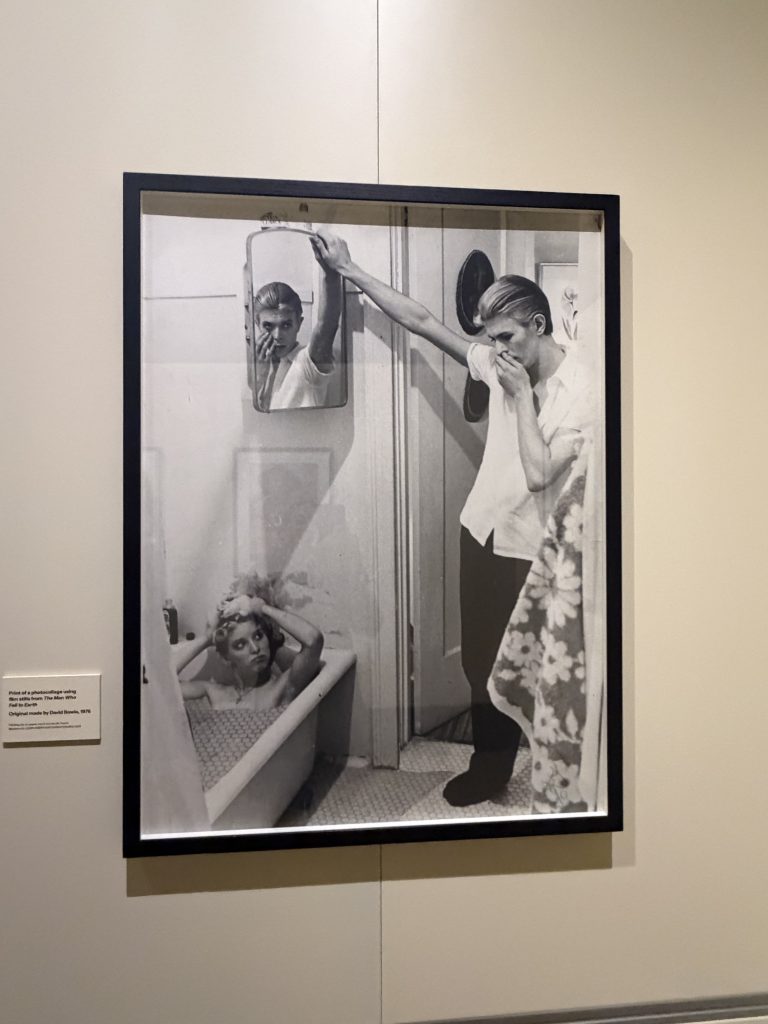
| 1976 | The Man Who Fell to Earth | Thomas Jerome Newton |
| 1978 | Just a Gigolo | Paul von Przygodski |
| 1981 | Christiane F. | Himself |
| 1983 | The Hunger | John Blaylock |
| 1983 | Merry Christmas, Mr. Lawrence | Major Jack Celliers |
| 1985 | Into the Night | Colin Morris |
| 1986 | Absolute Beginners | Vendice Partners |
| 1986 | Labyrinth | Jareth, the Goblin King |
| 1988 | The Last Temptation of Christ | Pontius Pilate |
| 1991 | The Linguini Incident | Monte |
| 1992 | Twin Peaks: Fire Walk with Me | Phillip Jeffries |
| 1996 | Basquiat | Andy Warhol |
| 1998 | Gunslinger’s Revenge | Jack Sikora |
| 1999 | Everybody Loves Sunshine | Bernie |
| 2000 | Mr. Rice’s Secret | William Rice |
| 2001 | Zoolander | Himself |
| 2006 | The Prestige | Nikola Tesla |
| 2007 | Arthur and the Invisibles | Maltazard (English-language voice) |
| 2008 | August | Cyrus Ogilvie |
David Bowie’s studio albums
These are his solo studio albums in chronological order, with links to information about each recording. The two albums originally called David Bowie are distinguished by their release years.
| Year | Album |
|---|---|
| 1967 | David Bowie |
| 1969 | David Bowie / Space Oddity |
| 1970 | The Man Who Sold the World |
| 1971 | Hunky Dory |
| 1972 | The Rise and Fall of Ziggy Stardust and the Spiders from Mars |
| 1973 | Aladdin Sane |
| 1973 | Pin Ups |
| 1974 | Diamond Dogs |
| 1975 | Young Americans |
| 1976 | Station to Station |
| 1977 | Low |
| 1977 | “Heroes” |
| 1979 | Lodger |
| 1980 | Scary Monsters (and Super Creeps) |
| 1983 | Let’s Dance |
| 1984 | Tonight |
| 1987 | Never Let Me Down |
| 1993 | Black Tie White Noise |
| 1993 | The Buddha of Suburbia |
| 1995 | Outside |
| 1997 | Earthling |
| 1999 | Hours |
| 2002 | Heathen |
| 2003 | Reality |
| 2013 | The Next Day |
| 2016 | Blackstar |
| 2021 | Toy — recorded in 2000, released posthumously |


