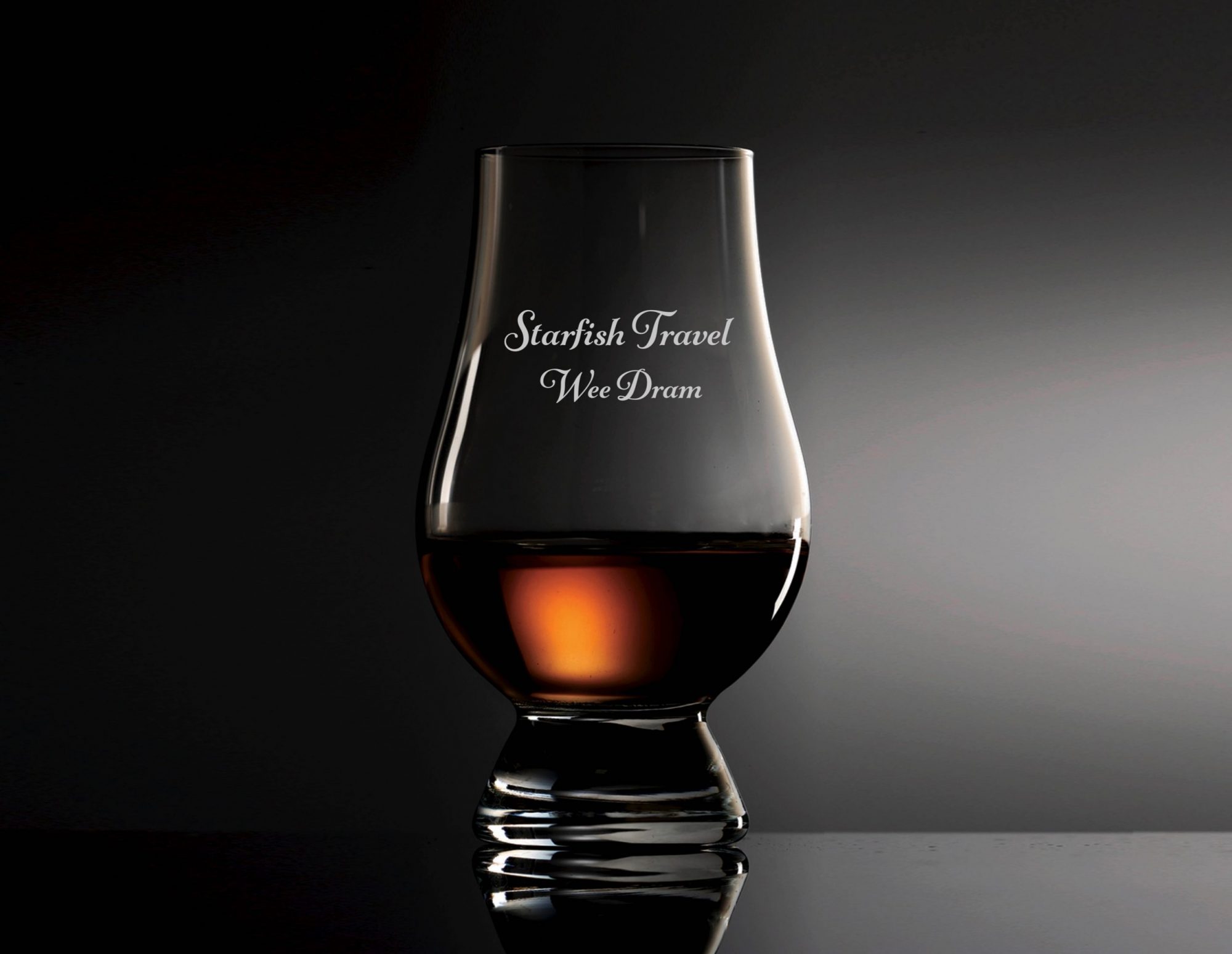
Who says Scotland is only worth visiting in summer?
If you have not quite got round to planning your 2027 Scottish adventure, here is a wee thought. There is still time to squeeze in a trip in 2026!
And if you happen to enjoy a dram or two, you have come to the right country.
Whisky, unlike some of our more seasonal attractions, does not particularly care whether it is January or July. Scotland’s distilleries can be wonderful places to visit throughout the year, and winter can actually be a rather lovely time to explore them.
Our climate is generally milder than many people imagine. Admittedly, if you venture into the Highlands, Mother Nature might have a few surprises up her sleeve, but elsewhere you could easily find yourself enjoying a crisp, sunny winter’s day that feels remarkably similar to a Scottish summer’s day.
Mind you, Scottish summers have been known to feel remarkably similar to winter, too.
So, wrap up, bring a waterproof jacket (always a sensible Scottish travelling companion), and let us go whisky exploring!
Five Whisky Regions, Endless Possibilities
Scotland officially has five whisky-producing regions: the Lowlands, Highlands, Speyside, Islay and Campbeltown.
There is also a rather wonderful collection of island distilleries, generally classified within the Highland region, although the islands certainly have personalities of their own.
You could explore all five regions on one grand whisky adventure, concentrate on just one, or simply choose the distilleries that tickle your fancy.
After all, whisky touring should be a pleasure, not an endurance event.
The Lowlands – A Gentle Introduction
The Lowlands are a splendid place to begin.
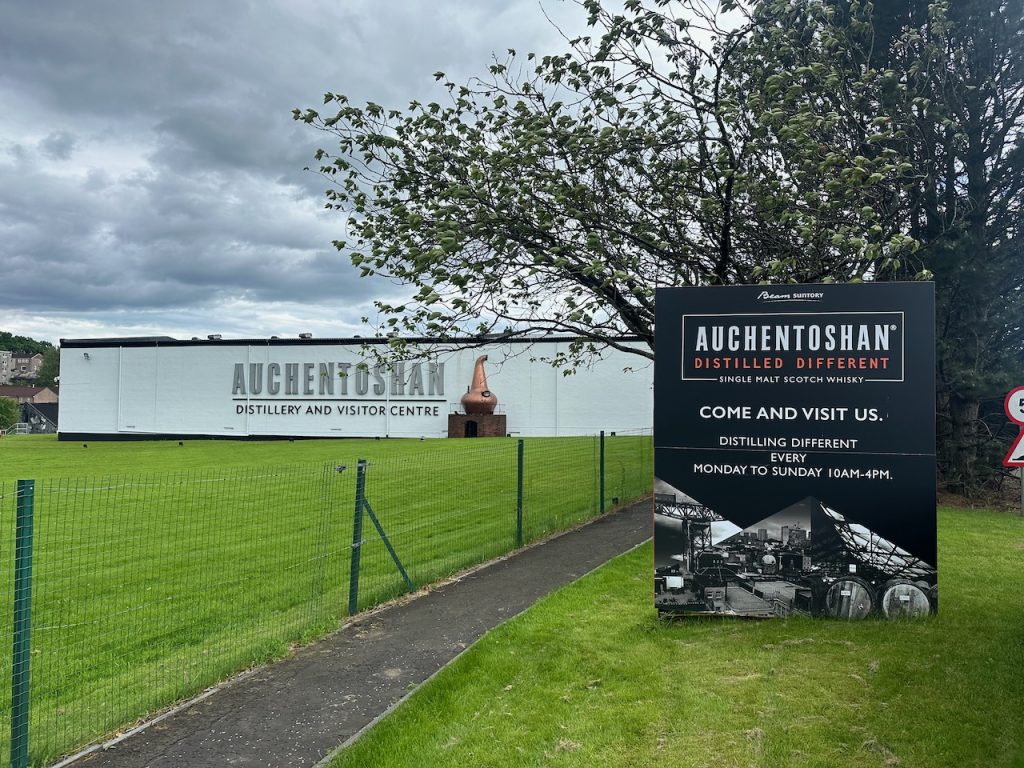
Take Auchentoshan, just outside Glasgow, for example. Famous for its triple-distilled single malt, it produces some beautifully approachable whiskies.
Or perhaps you fancy visiting one of the newer names on the Scottish whisky scene?
RAER at Jackton Distillery, in South Lanarkshire, is an interesting one. Its first single malt was released in September 2026, so this is a rather exciting time to discover what they are doing.
There is also The Glasgow Distillery, home of Glasgow 1770, or The Borders Distillery in Hawick.
There is plenty happening in the Lowlands, and it is exciting to see whisky production returning to places where distilling had disappeared for generations.
Campbeltown – Are We Nearly There Yet?
Ah, Campbeltown!
Situated towards the southern end of the Kintyre Peninsula, this is one of those places where the journey becomes part of the adventure.
If you travel by road, there may well come a moment when somebody in the back asks that immortal childhood question:
Are we nearly there yet?
The answer is usually, “Not quite, but look at that view!”
Campbeltown was once known as the whisky capital of the world, and today its distilling heritage is enjoying a remarkable revival.
You can explore the famous Springbank Distillery, Glen Scotia and Glengyle, home of Kilkerran whisky.
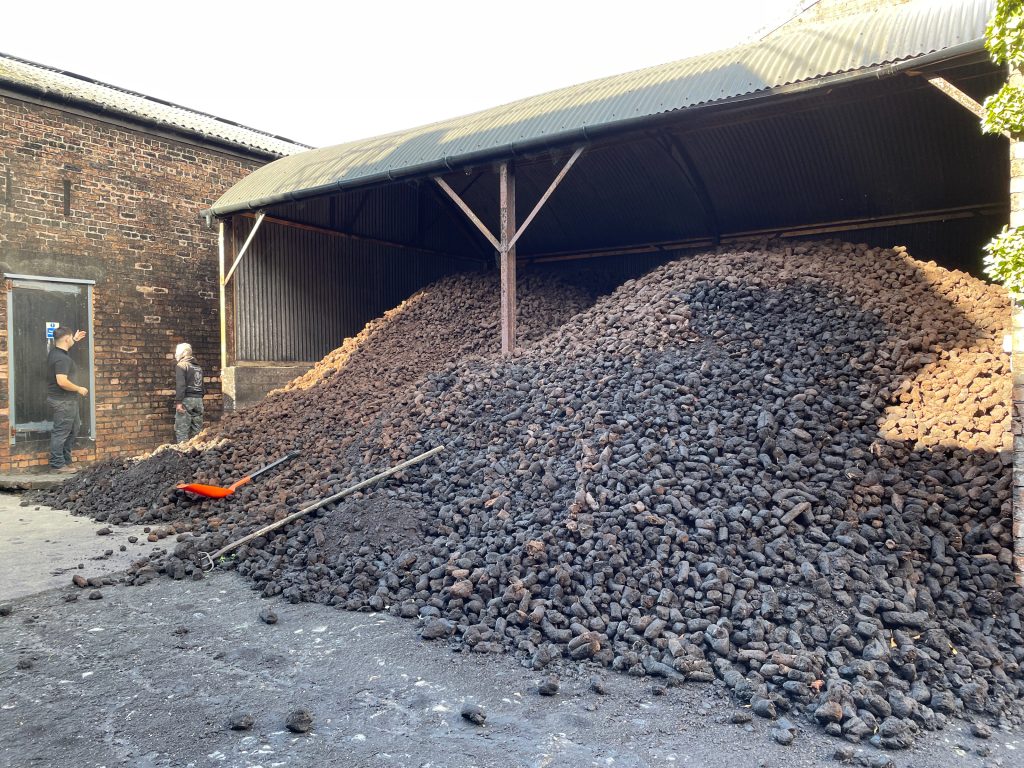
But why not turn the journey into something even more interesting?
Arran – Scotland in Miniature
Depending on your route and the ferry services available, you could incorporate a trip to the beautiful Isle of Arran.
Arran is often described as Scotland in miniature, and for very good reason.
The northern part of the island is rugged and mountainous, while the south is gentler, greener and more rolling. It is a wonderful place for walking, cycling, wildlife watching and simply enjoying the scenery.
And, naturally, there is whisky.
You have Lochranza Distillery, home of Arran Whisky, in the north and Lagg Distillery in the south.
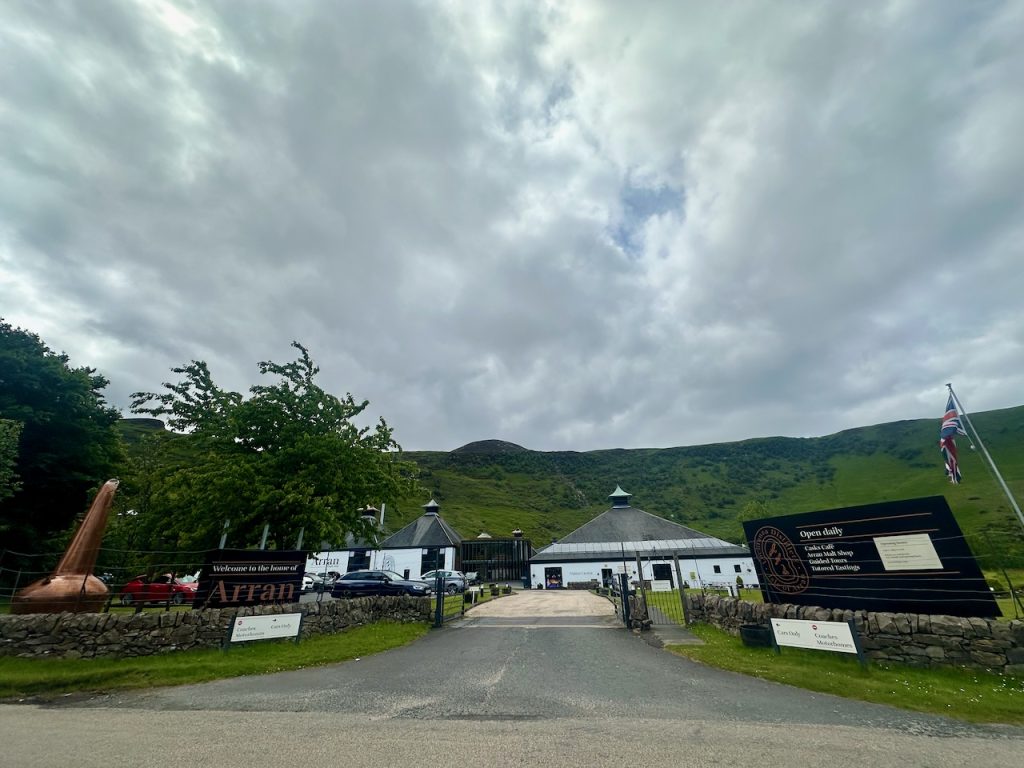
Two very different distilleries on one rather fabulous island.
It is worth remembering that ferry routes and timetables change seasonally, so a little planning is sensible, particularly in winter.
The Highlands – Tall Stills and Grand Landscapes
The Highland whisky region is enormous, stretching across some of Scotland’s most spectacular landscapes.
Take Glenmorangie, near Tain, for example.
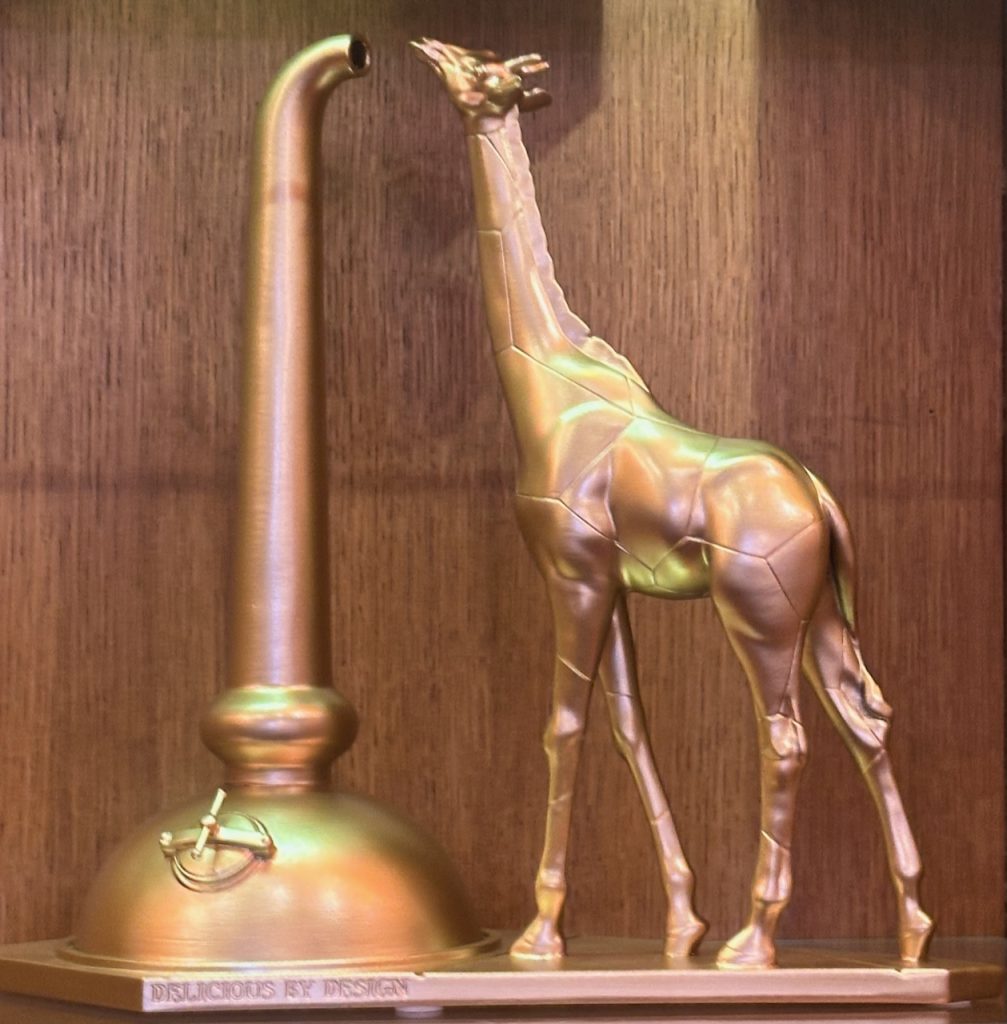
Glenmorangie is famous for its exceptionally tall copper stills, often compared to giraffes. They are among the tallest in Scotland and help produce the distillery’s elegant spirit.
Further north, you will find Brora, a legendary distillery brought back to life in 2021 after nearly four decades of silence.
Brora is very much open, but visiting is a rather exclusive affair. Tours are by advance appointment only, and the prices reflect its reputation as one of Scotland’s most sought-after whiskies.
For something a little different, there is also Glencadam Distillery in Brechin, producing a distinctive Highland single malt.
And there are so many others to discover.
The Highlands offer a beautiful combination of whisky, history, mountains, lochs and those glorious roads where you find yourself stopping every few minutes for another photograph.
Trust me, I know. I am usually the one suggesting the next stop!
Speyside – The Famous Names
If you are looking for some of the biggest names in Scotch whisky, Speyside is probably where your thoughts will turn.
This relatively compact region is home to an extraordinary concentration of distilleries.
Among its best-known names are:
And that is only scratching the surface.
Speyside is a wonderful place for whisky enthusiasts because so many distilleries are within relatively easy reach of one another.
You could spend several days exploring and still leave with a list of places you would like to visit next time.
Which, of course, is an excellent excuse to come back to Scotland.
Islay – Peat, Passion and a Wee Bit of Madness
Now, if you really want to immerse yourself in whisky culture, we need to talk about Islay.
Pronounced Eye-la, this beautiful island off Scotland’s west coast is one of the most extraordinary whisky destinations in the world.
It is not a particularly large island, yet it is home to an astonishing concentration of working distilleries.
Islay is famous for its smoky, peaty whiskies, but do not make the mistake of thinking that every whisky produced there tastes like a bonfire.
There is much more to it than that.
The Famous Smoky Trio
On Islay’s southern coast, you will find three of the great names in peated whisky:
Laphroaig, Lagavulin and Ardbeg.
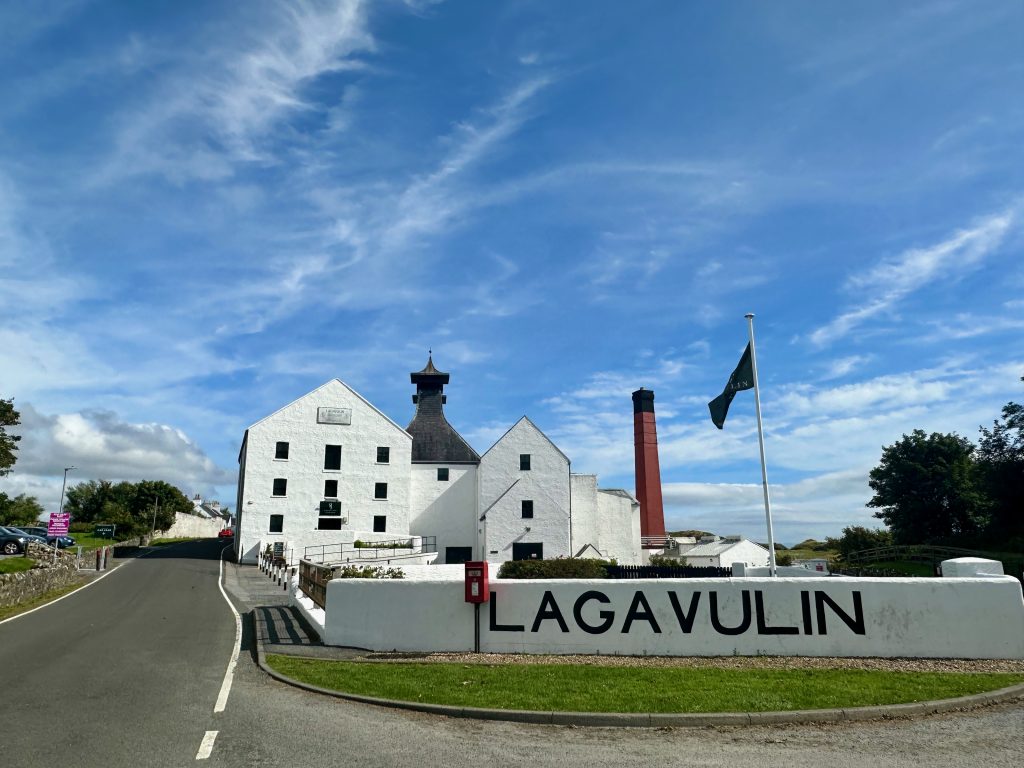
If you enjoy a whisky with a little smoke, sea air and attitude, you will be very happy here.
Some people describe heavily peated whisky as medicinal, others as wonderfully smoky and complex.
Personally, I think that is part of the fun. Whisky is wonderfully subjective.
Bunnahabhain – A Different Side of Islay
Then there is Bunnahabhain, beautifully situated on the island’s northeastern coast.
While Islay is famous for peat, Bunnahabhain is particularly well known for its unpeated and gently styled whiskies.
But it has a smoky side too.
Its Mòine expressions are distinctly peated. Mòine is the Gaelic word for peat, which seems rather appropriate.
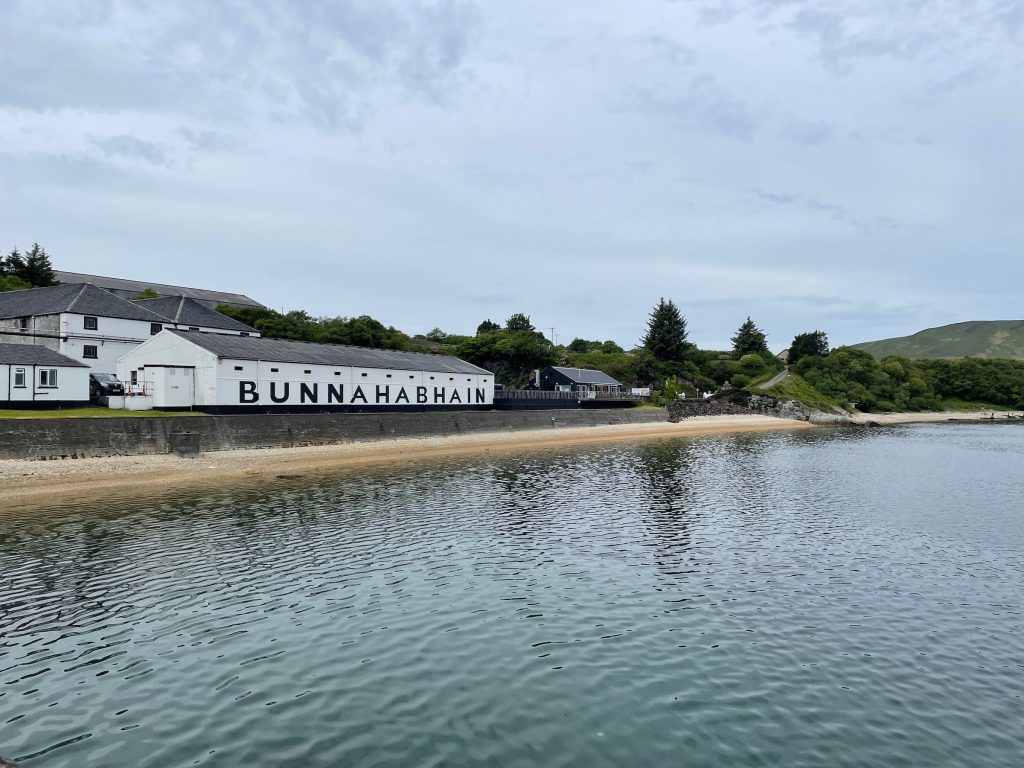
It is a lovely reminder that Islay is far more diverse than people sometimes expect.
Bruichladdich – A Distillery With Personality
And then we come to Bruichladdich.
This is a distillery with a fascinating story.
After being mothballed, Bruichladdich was revived in the early 2000s, with legendary master distiller Jim McEwan playing a central role in its remarkable comeback.
Bruichladdich has never been particularly interested in doing things just because everybody else does.
Its whiskies include the unpeated Bruichladdich range, the heavily peated Port Charlotte expressions and the extraordinary Octomore.
Octomore has become famous for pushing peat levels to astonishing extremes.
If you thought you had already tasted a smoky whisky, Octomore might just persuade you to reconsider.
The distillery is also known for experimenting with barley provenance, maturation and the relationship between whisky and the land.
A fascinating place, even for those who do not consider themselves whisky experts.
Kilchoman, Ardnahoe and Bowmore
Of course, there is more.
Kilchoman is a wonderful example of traditional farm distilling, with a strong emphasis on local barley and floor malting.
Ardnahoe, one of the island’s newer distilleries, has strong connections to Jim McEwan, who was involved in shaping its whisky-making character.
And then there is Bowmore, one of Scotland’s oldest licensed distilleries, sitting right beside the sea in the island’s main town.
There is also Caol Ila, overlooking the Sound of Islay, and the revived Port Ellen Distillery.
Add the island’s newer distilling ventures, its remarkable history, beaches, wildlife and extraordinary landscapes, and you have somewhere truly special.
Islay is not simply a whisky destination.
It is an experience.
And it is jaw-droppingly beautiful.
Whisky and Sustainability – A Greener Dram?
One of the things I find particularly interesting is how whisky producers are increasingly looking at their environmental impact.
Distilling uses energy and water, and the industry has some considerable challenges to address.
On Islay, there have been fascinating developments involving renewable energy, heat recovery, more efficient production and the use of distilling by-products.
There have also been proposals to harness the power of the tides around Islay, although these should not be confused with already operating tidal-energy installations.
If you would like to find out more about the industry’s environmental ambitions, the Scotch Whisky Association is a useful place to start.
It is encouraging to see distilleries exploring ways to protect the very landscapes and natural resources that make their whiskies so special.
After all, it would be rather nice if our grandchildren could enjoy both the scenery and the whisky.
Nc’nean – A Personal Favourite, and Worth Every Mile
Now, I have saved one of my personal favourites until last.
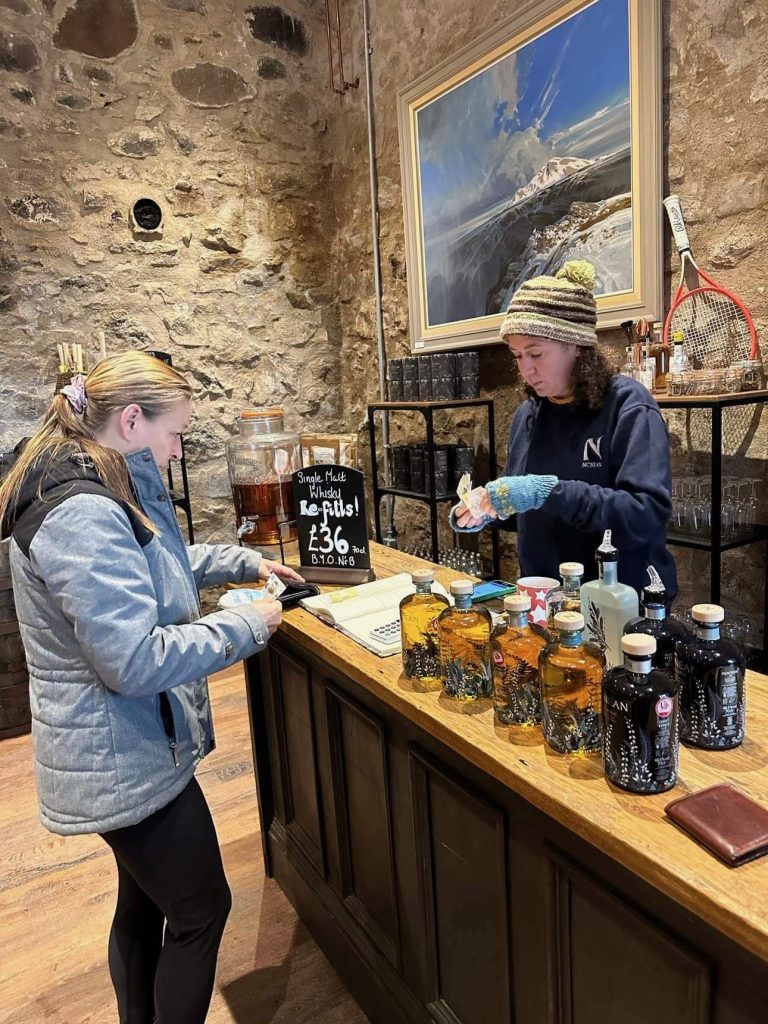
Nc’nean Distillery, on the beautiful Morvern Peninsula.
Founded by Annabel Thomas, Nc’nean is an independent distillery with a particularly strong commitment to sustainability, organic production and doing things differently.
And what a location!
Getting there by car can be a little like revisiting childhood family holidays.
You know the ones.
The road keeps going, the scenery becomes more spectacular, and somebody eventually asks:
Are we not there yet?
But believe me, when you arrive, you understand why you made the journey.
The distillery sits in a breathtakingly beautiful landscape, surrounded by nature, with the sort of peace and quiet that is becoming increasingly difficult to find.
There are accommodation possibilities in the wider Drimnin Estate area, making it a lovely destination for anyone who wants to slow down and spend a little time in this remote corner of Scotland.
And if you fancy extending the adventure, why not hop across to the Isle of Mull?
There you can explore the colourful harbour town of Tobermory and visit Tobermory Distillery.
Whisky, island scenery, beautiful coastlines and a little adventure.
What more could you possibly want?
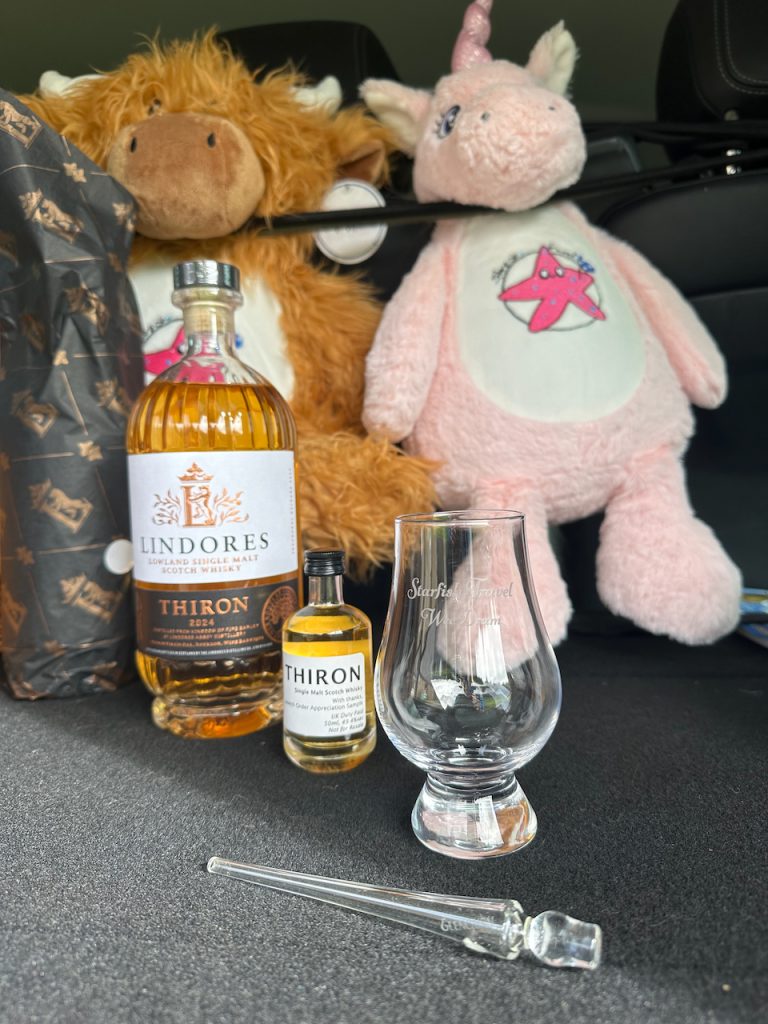
Winter Whisky Touring With Starfish Travel
The lovely thing about whisky touring is that there is no single right way to do it.
Perhaps you would like to visit the famous names in Speyside.
Perhaps Islay has been on your wish list for years.
Maybe you prefer smaller, independent distilleries, remote places and those wonderfully winding Scottish roads that lead somewhere unexpected.
Or perhaps you simply want to discover what makes Scotch whisky so special, without having to worry about driving afterwards.
That is where we come in.
At Starfish Travel, we specialise in bespoke private tours of Scotland, designed around your interests, your pace and the places you would really like to see.
No fixed coach itineraries, no being hurried along because somebody else wants to leave, and certainly no need to nominate a designated driver for the whisky tastings.
We can explore one region, combine several, or build a longer Scottish adventure with whisky, history, scenery, wildlife and a few surprises along the way.
Winter can be a particularly lovely time to travel. The roads are often quieter, the landscapes can be spectacular, and there is something rather special about arriving somewhere warm and welcoming after a day exploring the Scottish countryside.
Distillery tours, accommodation and ferry crossings do need a little forward planning, especially around Christmas and New Year, but that is all part of creating a well-organised private journey.
So, if you have not yet planned your 2027 Scottish adventure, why wait?
There may still be time for a wee whisky escape in 2026.
And if not, Scotland’s distilleries will be waiting for you in 2027.
Slàinte mhath!
Explore Scotland your way with Starfish Travel.
Website: www.starfishtravel.scot
Email: Kirstin@starfishtravel.scot
Telephone: +44 7446 112672


