Edinburgh is a city that carries its history not merely in stone, but in silence. Nowhere is this more keenly felt than in the quiet succession of buildings that have, at different times, held—or awaited—the voice of Scotland. Four parliaments, or rather four intentions of parliament, mark the shifting story of a nation negotiating its place within itself and within the Union.
I. The First Parliament — Parliament Square, Royal Mile
At the heart of the Parliament Square stands the original home of Scotland’s legislature: the Old Parliament House, completed in the 17th century. Here, beneath its hammerbeam roof, the Estates of Scotland once gathered—nobility, clergy, and burgh commissioners—each representing a strand of the realm.
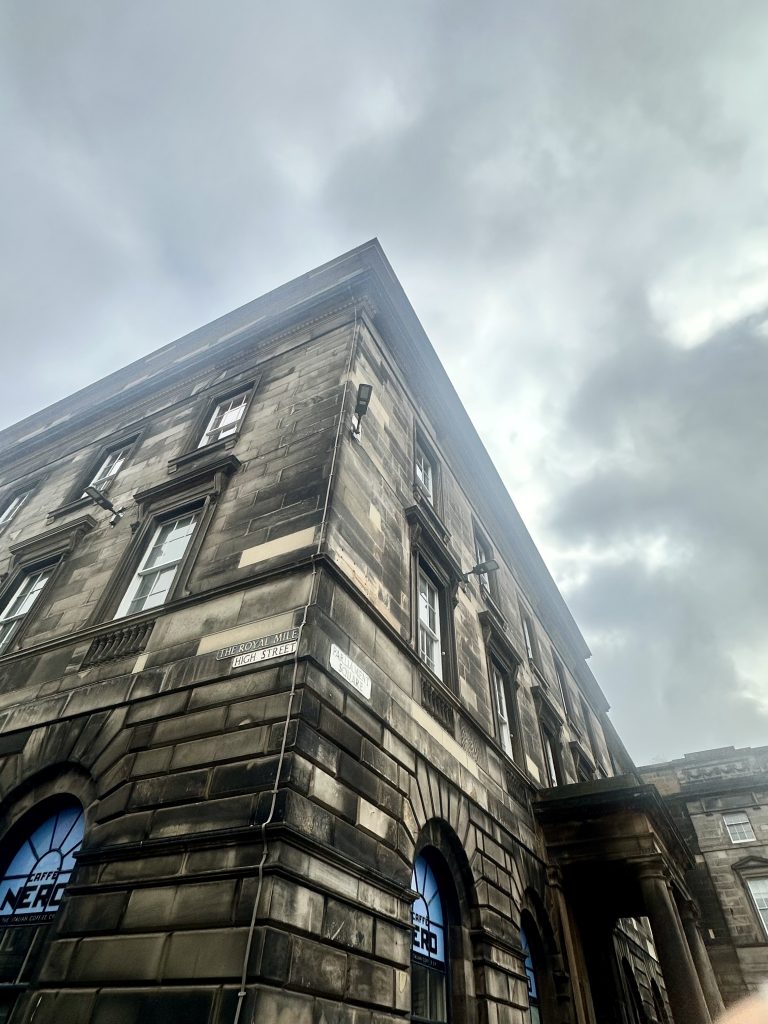
This was a parliament of proximity and presence. Debate was not abstract but immediate, conducted within a chamber where power could be felt in breath and gesture. Yet in 1707, with the passing of the Acts of Union 1707, the Scottish Parliament dissolved itself. Sovereignty, or at least its legislative expression, moved south to Westminster.
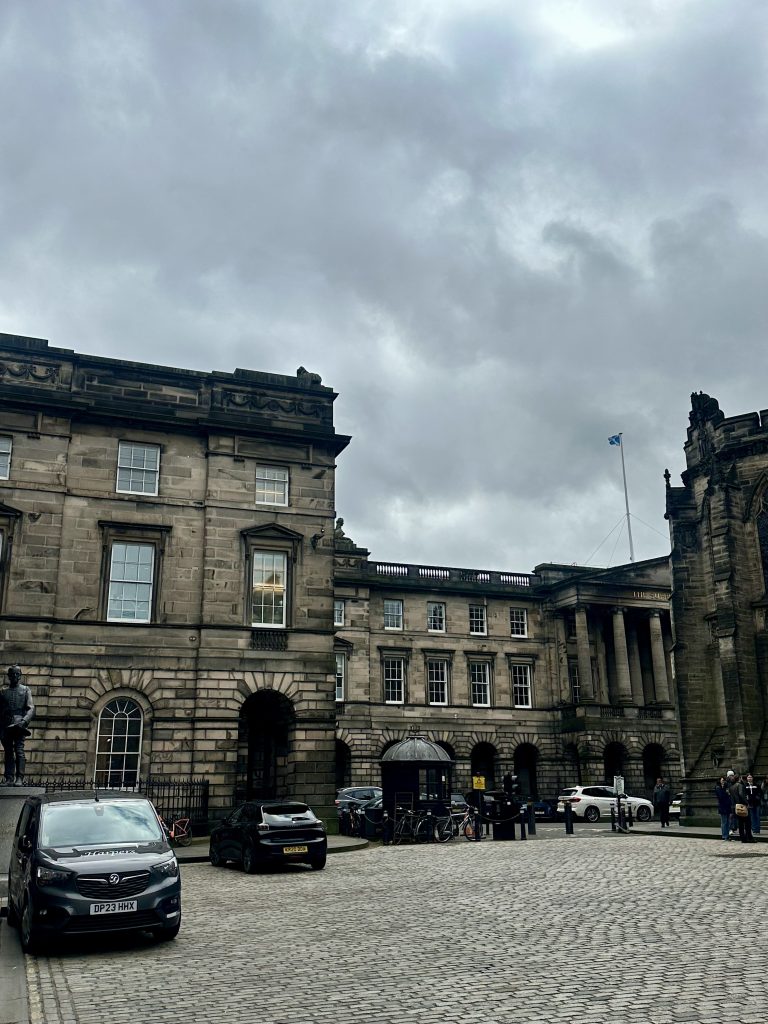
The building did not fall into ruin. Instead, it found a second life as part of Scotland’s legal system, becoming home to the Court of Session. Law replaced legislature; judgment replaced debate. The voice of Scotland did not vanish, but it changed its register.
II. The Unused Parliament — Calton Hill’s Quiet Intention
High above the city, on Calton Hill, stands a building that was never quite what it was meant to be: the Old Royal High School.
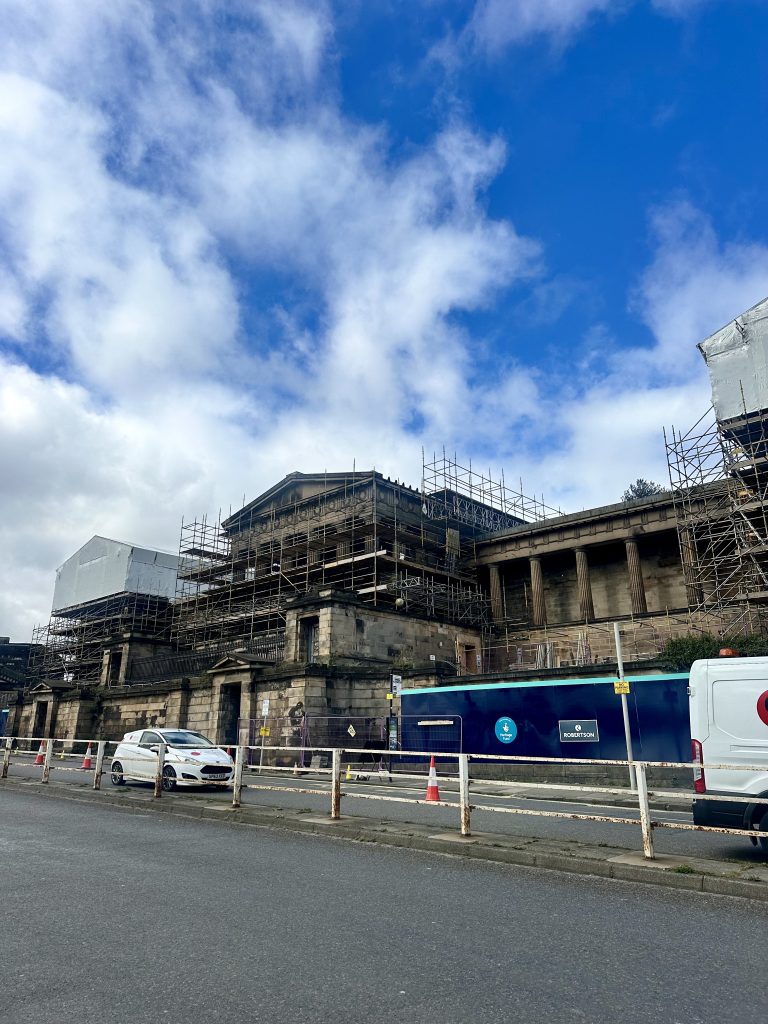
Designed in the 1820s by Thomas Hamilton in a noble Greek Revival style, it was built as a school for boys—an institution of learning and discipline, befitting Edinburgh’s reputation as the “Athens of the North”. Its colonnaded façade speaks not of haste, but of aspiration: a city aligning itself with the ideals of antiquity.
Yet in the 20th century, its purpose shifted. By the 1930s—your reference to 1936 touches on the period when civic and governmental functions expanded nearby, including developments that now relate to City of Edinburgh Council—the Old Royal High School began to be considered as a potential seat of governance.
In the 1970s, during renewed discussions around Scottish self-government, the building was prepared—quietly, almost expectantly—to serve as a parliament chamber. Seating was installed. Infrastructure was laid. Telephones waited for voices that never came.
The referendum of 1979 did not deliver devolution. And so the building remained—a parliament in readiness, yet unused. For decades it stood as a kind of architectural pause: a chamber furnished for democracy, but without a mandate to speak.
Only in recent years has its fate shifted again, with plans—contentious and debated—to convert it into a hotel. Even scaffolded, even repurposed, it carries the weight of what might have been.
III. The Civic Seat — The Council Chamber
Back down on the Royal Mile, within the complex now known as the Edinburgh City Chambers, governance continued in a different form. Though not a national parliament, the council chambers represent the persistent machinery of local democracy.
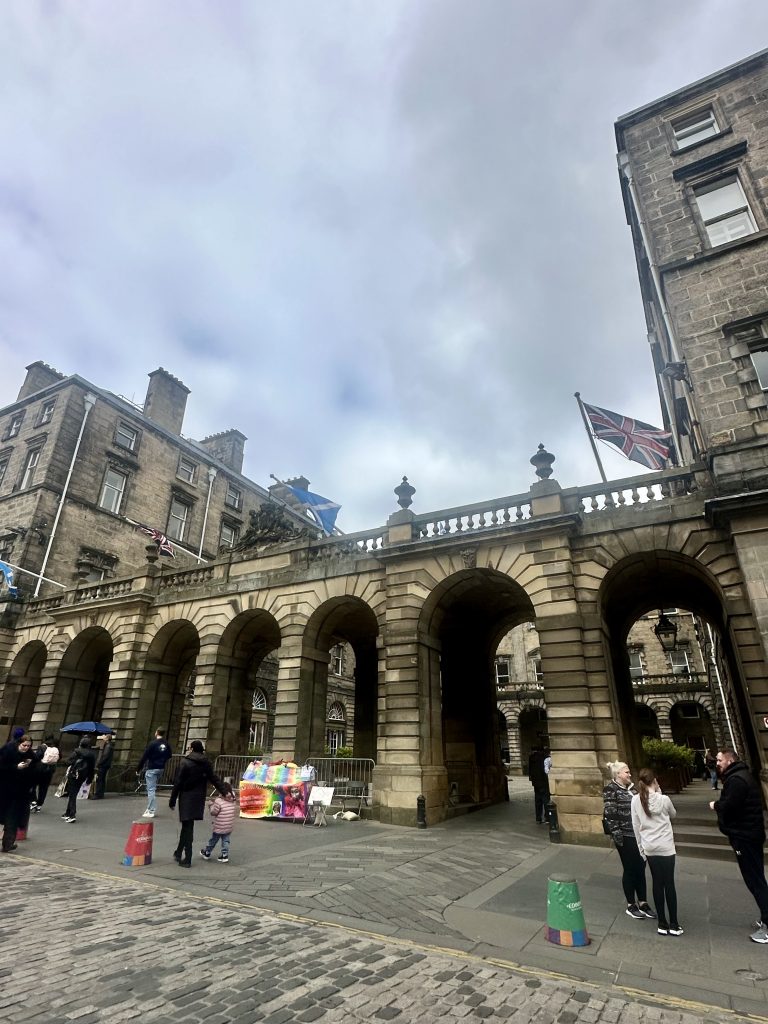
The development of municipal buildings in the early 20th century, including expansions around the 1930s, reflected a broader societal shift: governance was no longer solely the domain of aristocratic estates but increasingly of civic administration. Education, sanitation, housing—these became the concerns of government, and they required buildings not of grandeur alone, but of function.
In this sense, the council chamber is perhaps the most quietly important of the four. It represents continuity. While national questions ebbed and flowed, local governance endured.
IV. The Modern Parliament — Holyrood
At last, at the foot of the Royal Mile, lies the present voice of Scotland: the Scottish Parliament Building.
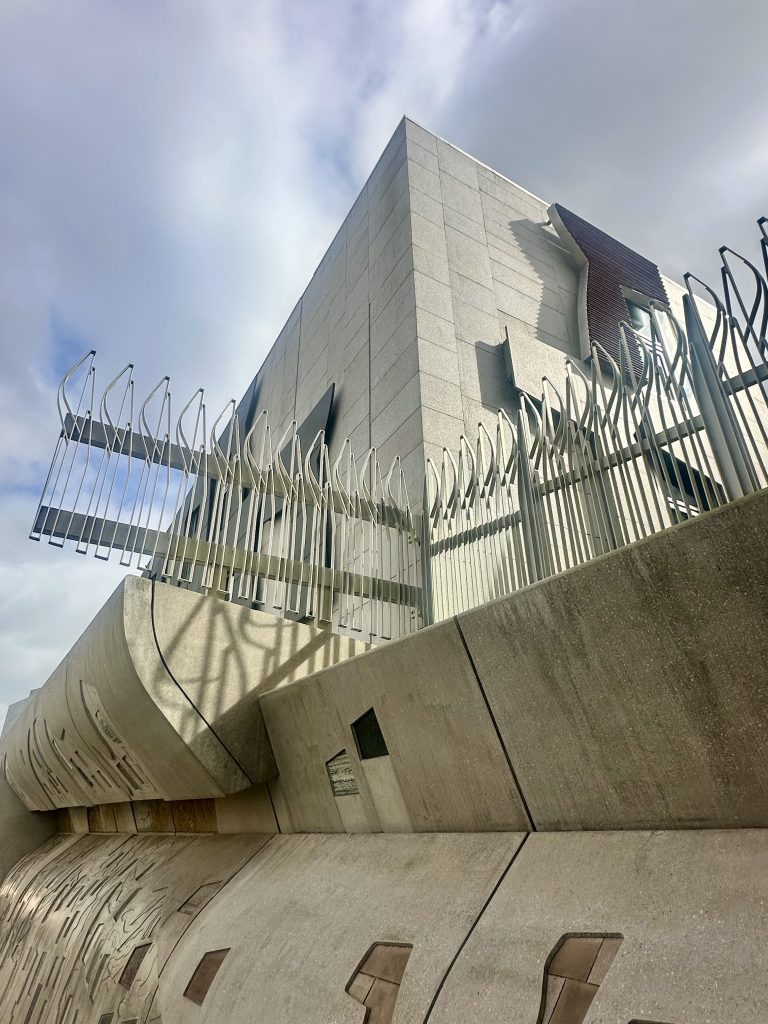
Following the successful devolution referendum of 1997, a new parliament was not merely proposed but realised. Designed by the Catalan architect Enric Miralles, the building is a striking departure from its predecessors. Organic, controversial, and undeniably modern, it opened in 2004 and was formally inaugurated by Queen Elizabeth II.
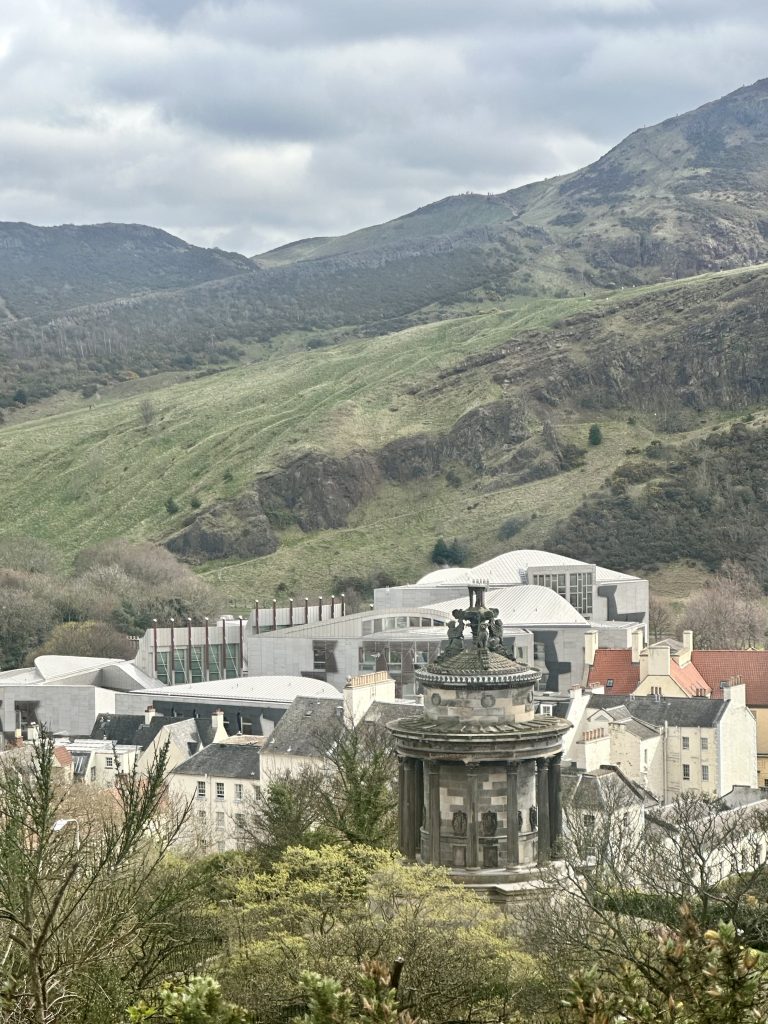
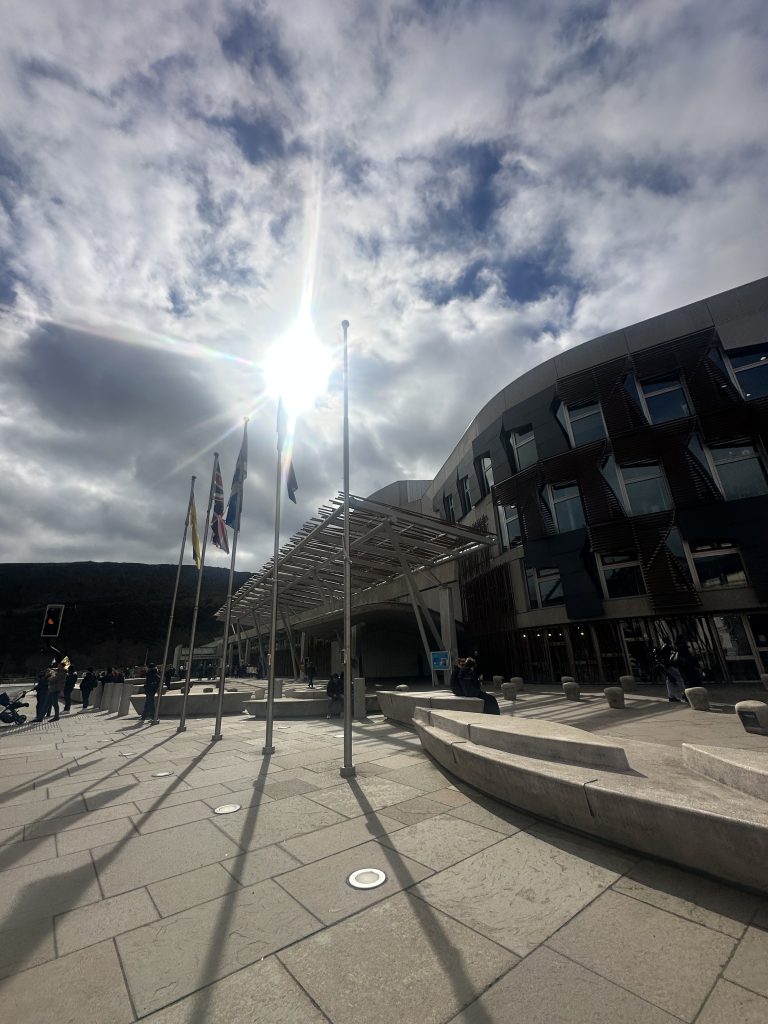
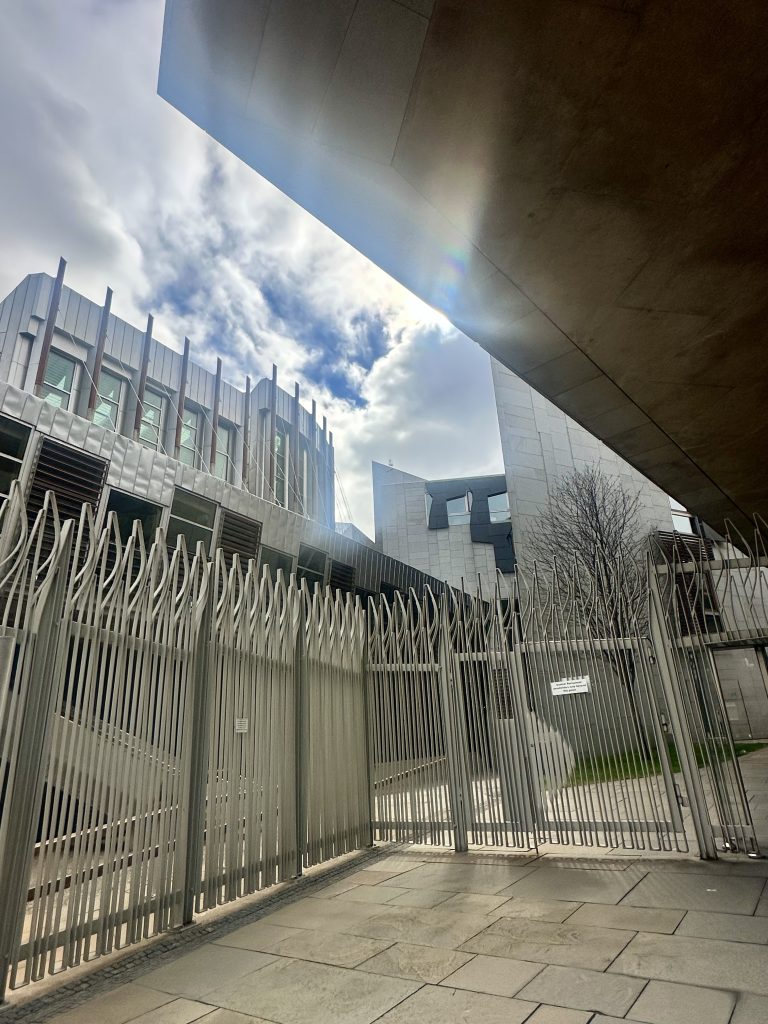
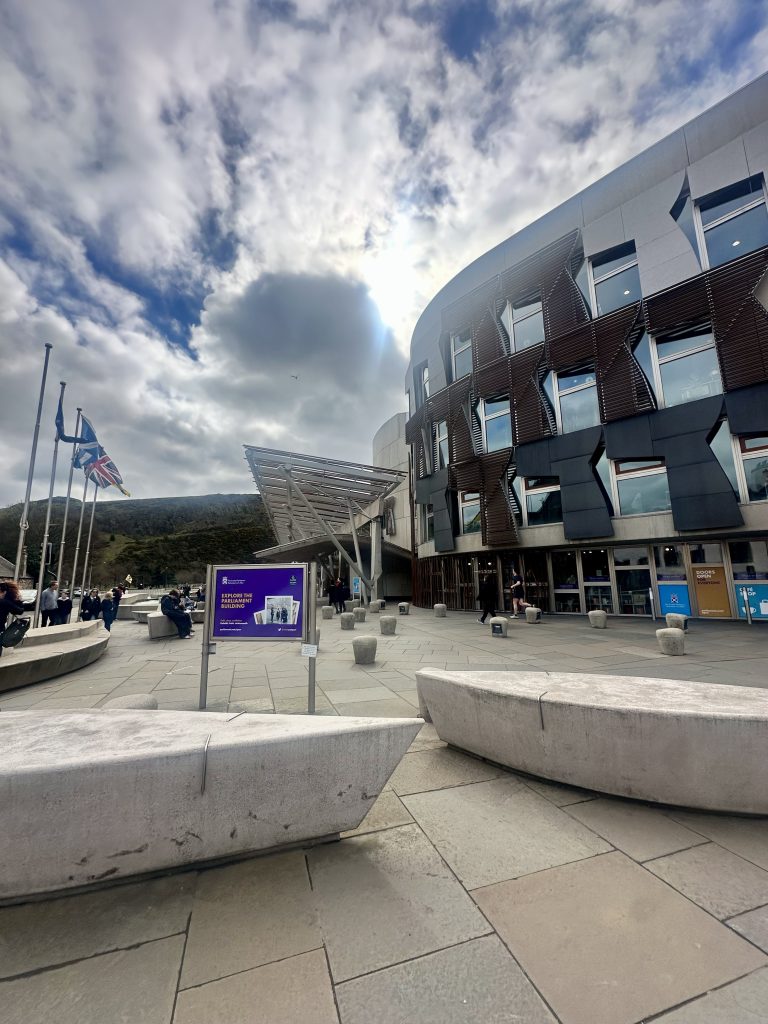
Its construction was costly—financially and politically—but its symbolism is clear. This is not a borrowed chamber, nor a repurposed school. It is a parliament built intentionally for a devolved Scotland, situated at Holyrood, beneath the shadow of Arthur’s Seat.
Here, the voice that once fell silent in 1707 speaks again—different in scope, yet undeniably present.
Parliament and Society in Scotland
The story of these four buildings is not merely architectural. It reflects a deeper Scottish tension between union and autonomy, tradition and reinvention.
Scotland’s society has long been shaped by strong institutions—law, education, church—each carrying a sense of intellectual and civic responsibility. Even in the absence of a national parliament, these structures maintained a distinctly Scottish identity.
When the parliament returned, it did not emerge from nothing. It rose from centuries of civic habit, legal independence, and cultural continuity.
A City That Waits, and Remembers
Edinburgh does not forget its parliaments. It keeps them—used, unused, repurposed, or renewed—each one a chapter in a longer conversation.
From the hushed chamber of Parliament Square, to the silent readiness of Calton Hill, to the practical governance of the council, and finally to the bold lines of Holyrood, the city tells a story not of loss, but of endurance.
A nation may pause. It may defer. It may even fall silent.
But in Edinburgh, it never quite stops listening for its own voice.


